Flip a House Furniture & Selling Guide
Raise sale price with smart furniture, then cash out at the right moment.
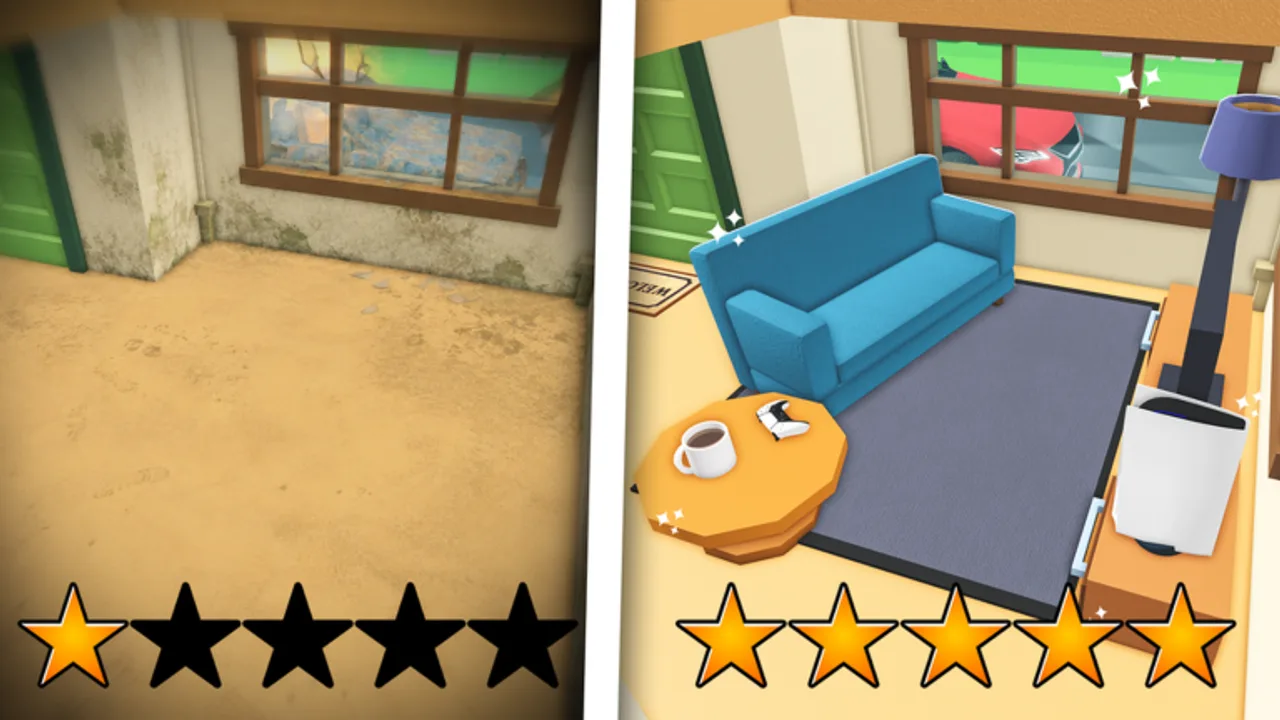
From clean shell to BIG MONEY listing
Cleaning makes a Flip a House! property acceptable. Furniture makes it valuable. In this Increates House experience you raise the projected sale price by placing pieces, then sell for BIG MONEY to unlock better gear and bigger houses. Knowing what to place and when to stop is the difference between a juicy flip and a decorated money pit.
This guide covers how furniture lifts price, how to think about buyer / house tiers as you climb, and sell timing. Come in with rooms already cleaned using Cleaning Tips. For overall cash-per-hour math, keep Make Money Fast open beside this page.
Rule one — never furnish a dirty room
If trash or stains remain in a hero room, furniture spend underperforms and pathing gets worse. Finish trash → vacuum → scrub for entry, living, kitchen, and baths before you open the catalog. Empty clean space is your canvas; filthy space is a tax.
How furniture raises price
Think of the sale meter as a conversation with an invisible buyer:
- Empty rooms signal “unfinished” and keep price depressed
- Large anchor pieces (sofas, beds, tables, major appliances) usually move the needle hardest
- Fill pieces (chairs, lamps, rugs, side tables) add value when anchors already exist
- Spam trinkets eventually stop moving the meter — that is your sell signal
After every two or three meaningful placements, glance at the price readout. Training your eye on delta per purchase matters more than memorizing a single meta item name that might change after an update.
Placement priority by room
| Order | Room | Furniture focus |
|---|---|---|
| 1 | Living / entry | Sofa sets, tables, lighting that complete the first impression |
| 2 | Kitchen | Functional large pieces buyers expect in a usable kitchen |
| 3 | Primary bedroom | Full bed set before tiny decor |
| 4 | Bathrooms | Essential fixtures / fittings if the shop offers them |
| 5 | Extra bedrooms | Repeat bed logic only if cash remains |
| 6 | Flex corners | Only if the meter still jumps |
This order mirrors cleaning priorities on purpose. You want the same rooms to be both clean and dressed.
Budgeting furniture like an investor
Separate your cash into buckets after each sale:
- Tool fund — next vacuum / scrub / trash upgrade
- Furniture fund — this house’s value pieces
- Buffer — never go to zero before a sell
New players dump everything into decor, then crawl through the next dirty house with starter tools. Reverse that once cleaning is the bottleneck. Free Like + Join Group money (Codes Hub) should usually seed tools or the first anchor sofa set — not twenty micro items.
Buyer tiers and bigger houses
As you unlock larger properties, the “buyer” expectation scales. Bigger houses generally:
- Need more anchor furniture to feel complete
- Punish empty wings harder on the price meter
- Take longer to clean, so over-decorating becomes more expensive in time
You do not need a lore document for each buyer NPC to play well. You need a practical read:
- If the house is a step up in size, plan more budget for living + kitchen anchors
- If clean time doubled but your furniture budget did not, sell earlier and upgrade tools first
- If co-op partners are furnishing different wings, assign wings explicitly (Co-op Guide)
Climb house tiers when your clean tools and furniture budget both feel ready — not when the unlock button merely exists. Getting Started frames that early decision; this page is your mid-game reminder.
Sell timing — the plateau rule
Sell when the price meter plateaus, not when the house looks perfect on your personal taste meter.
Signs it is time:
- Three purchases in a row add almost nothing
- Only closets and tiny corners remain empty
- Teammates are idle
- The next useful cleaning upgrade is within reach if you cash out now
Signs you should keep going:
- A whole hero room is still empty
- Each bed or sofa still pops the meter
- You have surplus cash above the tool fund
Perfectionism is not a strategy. Flip a House! rewards cycle speed. A “pretty enough” sale that funds a better scrub tool will out-earn a museum piece that took forty extra minutes.
Sell flow checklist
- Confirm P0–P2 rooms are clean and have anchors
- Do a 20-second walk for forgotten empty corners that are cheap to fill
- Stop buying once deltas shrink
- Trigger sell and watch the BIG MONEY land
- Immediately earmark tool vs furniture vs buffer before the shop seduces you
If the sell UI fails or cash does not update, rejoin and verify totals before starting another furnish spree.
Co-op furnishing without chaos
Four players in one catalog is chaos. Try:
- One designated furnisher early game
- Or wing ownership (Player A living/kitchen, Player B beds) on bigger homes
- Voice or chat callouts before expensive purchases
- A hard “plateau sell” call from whoever watches the meter
Cleaners should not silently spend the furniture fund on a random lamp. Agree on budgets before the house starts.
Common furniture mistakes
- Decorating the kitchen while trash remains in the living room
- Buying prestige items that barely move price
- Symmetry obsession (mirroring every pillow) after the meter died
- Climbing to a huge house with no furniture budget left
- Ignoring tool ROI because “furniture is the fun part” — fun lasts longer when flips are fast
- Trusting unverified money scripts instead of sell discipline (Scripts Hub)
Linking furniture to the rest of the wiki
- Learn the loop: Getting Started
- Shorten clean phase: Cleaning Tips
- Maximize cash/hour: Make Money Fast
- Rank upgrades: Tier List Hub
- Watch patches that change economy: Updates Hub
- Browse all tutorials: Guides Hub
Practice goal for your next three houses
On each house, write down (mentally is fine):
- Furnish spend
- Rough sale price
- Whether the last five items were worth it
If the last five items were duds, you sold too late. If a hero room was empty at sell time, you sold too early. Calibrate until plateau sells feel natural.
Furniture in Flip a House! is a price lever, not an interior-design finals project. Pull the lever hard, then sell — that is how listings turn into upgrade funds and bigger flips.
Frequently Asked Questions
Quick answers for Flip a House players.
How does furniture increase sale price in Flip a House?
Placing pieces fills empty rooms and raises the projected sale meter. Large anchor items usually help most; tiny decor stops mattering once the meter plateaus.
When should I sell my house?
Sell when additional furniture barely moves the price. Cash the plateau, fund tools, and start the next flip instead of chasing perfect decoration.
Should I furnish before cleaning?
No. Clean trash, vacuum, and scrub hero rooms first. Furniture in dirty spaces wastes money and movement.
What rooms should I furnish first?
Living/entry, kitchen, and primary bedroom. Those rooms drive first impressions and usually offer the best price gains per item.
Do bigger houses always mean more profit?
Only if your cleaning tools and furniture budget scale with the size. A slow, under-furnished big house can earn less per hour than a fast small flip.